Case studies
Where VoyaOps fits best.
Show the business model the client recognizes first, then move into the right product contour and launch path.
Bookings and departures in one contour
Operators stop switching between spreadsheets, chats, and document folders just to keep one departure moving.
Partners work inside the same runtime
Agencies, commissions, shared files, and payout history move into one controlled layer.
The launch already has a platform base
Branding, languages, imports, and future provider setup are already planned into the product.
Website-first sales flow
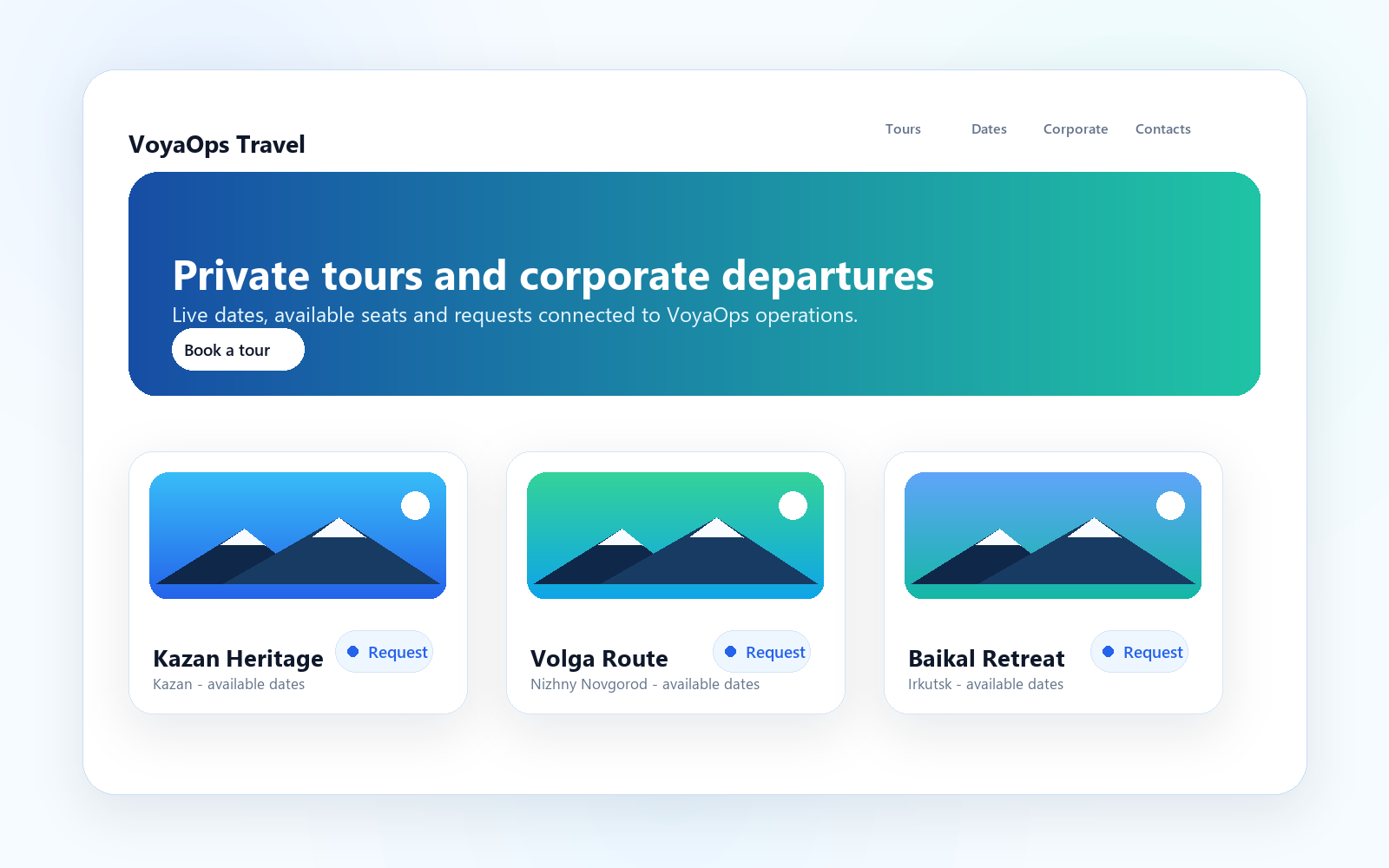
Tour company needs a beautiful public website and a real booking backend behind it.
The customer-facing site should sell trips confidently, while every serious request moves into the same operator workspace for follow-up, documents, payments, and execution.
- The website looks separate from real operations.
- Requests disappear into messengers, email, or spreadsheets.
- Managers cannot connect marketing demand with booking execution.
- A branded website launches as the public front door of VoyaOps.
- Tour cards, dates, requests, and customer actions stay connected to the booking base.
- The first demo can show both the site and the operator cockpit in one flow.
Case 01
Direct operator with live departures and too much manual work.
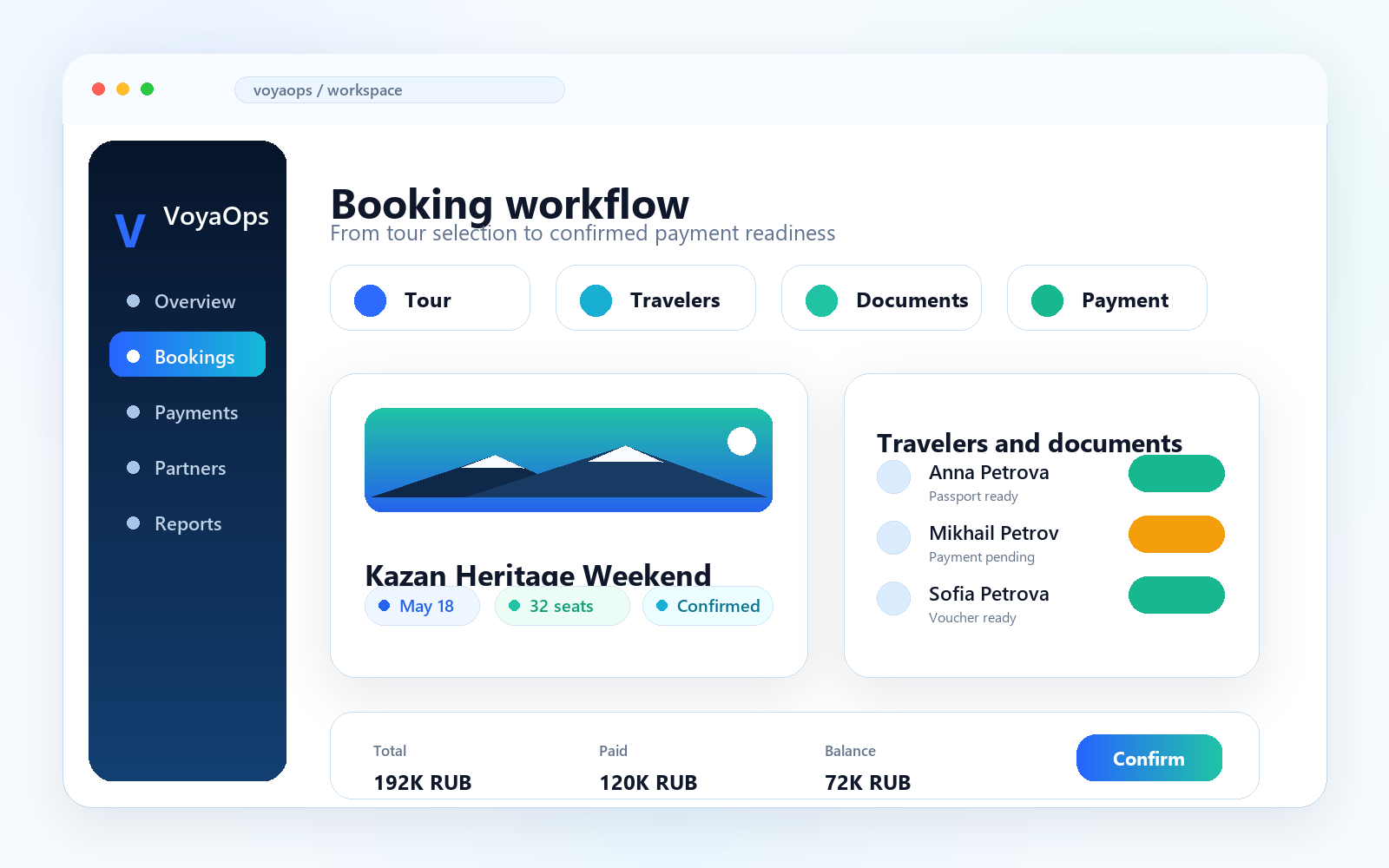
The company already sells tours, but bookings, traveler data, documents, and departure coordination still move through a messy operator routine.
- Booking records live across chat, spreadsheets, and email threads.
- Departure readiness depends on manual checks and status chasing.
- Payment status and operating work are reviewed in separate places.
- One booking workspace for status, travelers, documents, and payments.
- Departure files, seat control, and operator checkpoints move into one system.
- Managers see execution and revenue inside the same live contour.

Case 02
Operator with an agency network that needs commercial visibility.
The business already sells through partners, but commissions, documents, and payout communication still create friction for both sides.
- Agency bookings arrive without a shared operating record.
- Commission logic and payout history are buried in manual files.
- Partner-facing document exchange is chaotic and slow.
- Agencies work in their own contour with booking visibility and shared documents.
- Commissions, payouts, and partner-facing files move into structured runtime.
- The operator keeps control without pushing work back into email chaos.
Case 03
Regional company preparing to scale operations cleanly.
The company needs more than a booking page. It needs a branded operating system, multilingual access, imports, and a stable path for future payment connections.
- The current setup is too local, too manual, and too hard to scale.
- Branding and daily operations still feel disconnected.
- Future payment connections are not planned in the current product model.
- The product launches under the client brand with multilingual access already in place.
- Imports, commercial fields, and process logic support a real production launch.
- Future provider-specific payment work can be added without rebuilding the platform base.
Next step
Pick the case the client recognizes first, then move into the right launch model.
The strongest conversation starts when the client sees the pain, the fitting contour, and a clear next step inside one flow.